Ethernet-APL
What Is Ethernet-APL?
Ethernet-APL (Advanced Physical Layer) is an enhanced physical layer for single-pair Ethernet based on the IEEE 802.3cg 10BASE-T1L standard. It is designed to meet the rigorous demands of field process automation and usage in hazardous environments. Ethernet-APL simplifies network architecture by supporting both data and power transmissions over a single connection for more efficient and cost-effective installations. Ethernet-APL also provides high-speed, 10 Mbit/s full-duplex communication over distances up to 1,000 meters. These features combined make Ethernet-APL ideal for building scalable and reliable industrial networks, revolutionizing Ethernet accessibility for field-level instruments.
Key Features of Ethernet-APL

Two-wire Ethernet
Using only a single twisted-pair cable reduces material costs and simplifies installations, saving precious time and resources.

Power and Data
By providing both power and data over a single twisted-pair cable, Ethernet-APL eliminates the need for dedicated power lines in industrial settings.

High-speed Connectivity
Ethernet-APL supports full-duplex data rates of up to 10 Mbit/s, more than 300 times faster than other field communication protocols.

Extended Reach
Ethernet-APL supports seamless communications across longer distances of up to 1,000 meters.

Explosion Protection
Designed for explosion protection, Ethernet-APL is ideal for use in hazardous environments.
What Is the Difference Between Ethernet-APL and Single-pair Ethernet?
Ethernet-APL is an industry-specific profile outlined in IEC TS 63444:2023, enhancing the IEEE 802.3cg 10BASE-T1L single-pair Ethernet (SPE) standard to meet the specific needs of process automation in different industries, including oil and gas, chemicals, and pharmaceuticals. This technology allows seamless integration of field instruments with industrial networks over Ethernet by leveraging several key attributes:
- Standardized Power Delivery: Simultaneously delivers power and data over a single twisted-pair cable using predefined power classes.
- Hazardous Area Protections: Designed with embedded safety measures for deployment in hazardous locations, supporting both intrinsically safe (CID2 Zone 0/1) and non-intrinsically safe (CID2 Zone 2) applications.
- Streamlined Field Connectivity: Specifies electrical parameters, topology rules, port classifications, and device roles for reliable field installations.
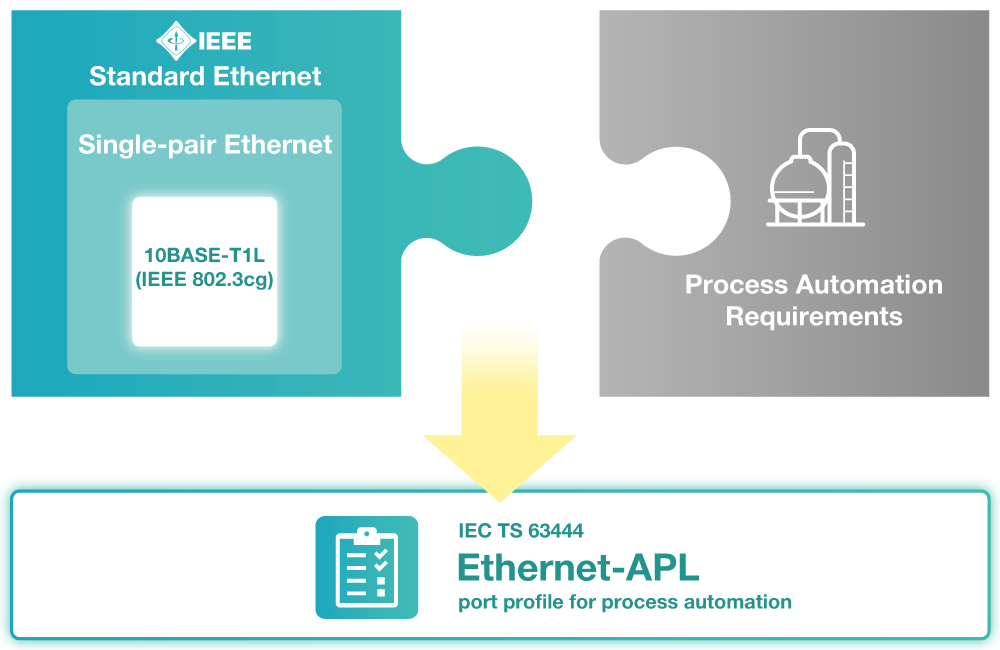
How Is Ethernet-APL Revolutionizing the Industry?
Ethernet-APL extends standard Ethernet to the field level, offering robust and reliable digital communication that boosts operational efficiency. This technology features explosion protection and crucial safety features, making it perfect for use in hazardous environments. By using APL-compatible networking equipment and field devices, industries can seamlessly integrate and optimize their processes, enhancing productivity and safety in field process plants. Ethernet-APL is not just an upgrade; it’s a game-changer for building smarter and safer industrial operations.
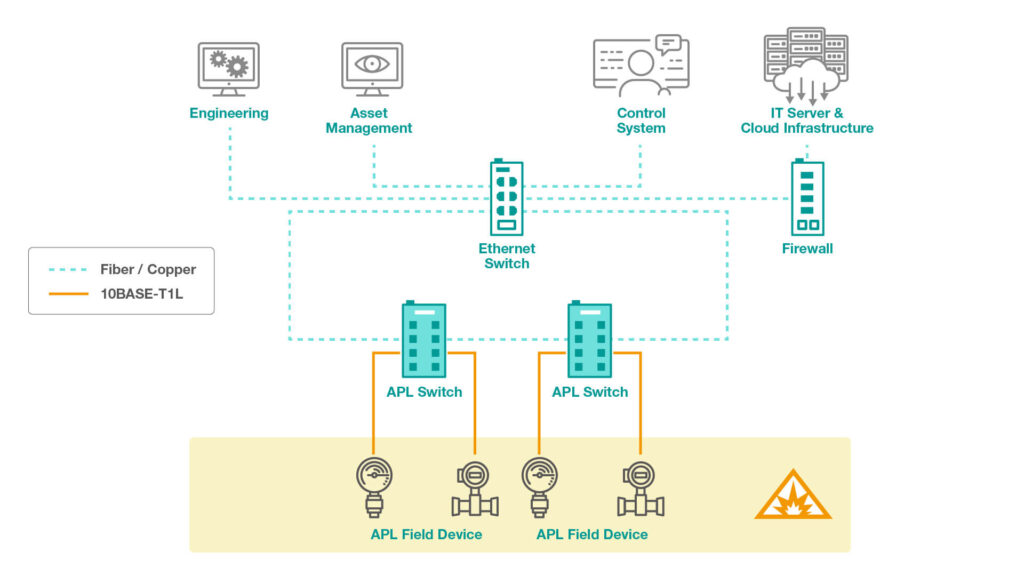
Ethernet-APL Applications
Process automation is crucial in industries such as the oil and gas, mining, and chemical sectors, where complex operations and harsh environments demand robust, reliable, and high-performance networking solutions. Ethernet-APL offers several advantages tailored to the specific needs of these industries. Here are just a few ways process automation in these sectors can benefit from Ethernet-APL.
Requirements:
- Solid reliability to ensure 24/7 continuous operations in harsh and hazardous operating environments.
- Ability to facilitate large-scale and remote installations.
- Need for real-time monitoring and control capabilities.
Benefits of Ethernet-APL:
- Explosion Protection: Ethernet-APL is designed for use in hazardous conditions, ensuring safe operations in explosive environments common in the oil and gas, mining, and chemical industries.
- Long-distance Connectivity: With cable lengths up to 1,000 meters, Ethernet-APL connects scattered industrial field devices over longer distances.
- Real-time Communication: Featuring data rates up to 10 Mbit/s, Ethernet-APL enables more precise data acquisition and control than other field communication protocols, enhancing decision-making and operational efficiency.